
The Discover Portugal blog contains affiliate links. If you make a purchase using one of these links, we may receive compensation at no extra cost to you. See the Disclaimer for more information.
Discover the best food tours in Lisbon!

I have heard a lot about the food tours in Lisbon, but I have been wondering which one to pick! As you might have the same questions, we booked a Lisbon food tour to experience it ourselves. The verdict? It’s a must-do for foodies! In this post, I will explain which food tour we picked and why, and I will explain in detail what was included in the 3-hour walking tour! Later, I will explore some other options for you as well.
What to expect during the food tours in Lisbon

No time to read? This is the experience we booked!
Not sure where to go in Portugal?
Take the free Portugal travel quiz and find the destination that best matches your travel style. You’ll get your result plus practical tips to help you start planning your trip.
Which Lisbon food tour we picked, and why
In general, we book our tours and excursions in Portugal with Viator or GetYourGuide, so I looked on these websites to see what was on offer. But which is the best food tour to choose? There are a ton of options, so I started looking at the feedback received and how many stars the food experiences in Lisbon had. I found several good ones, and most food tours in Lisbon take a similar amount of time, too: 2.5 to 3.5 hours.
I then started looking at what was included, how many dishes, and how many drinks. Ultimately, we picked a small walking group so we could interact with other travellers. Our pick was the Lisbon: Food and Wine Small-Group Walking Tour offered by Inside Lisbon Tours on GetYourGuide.
Where did we go during the food tour in Lisbon?
We met the group and tour guide, Filipe, at Rossio Square in downtown Lisbon. After a short introduction, we made our way to the first place. I’ve compiled all the places we visited in the culinary backstreets and what we had to eat and drink. The route is all around Rossio Square. It’s a flat area that is easy to walk, and the distances were short. Let’s dive in!
Solar da Madalena
Our first stop was at Solar da Madalena for a bifana and a beer. A bifana is like a pork sandwich, often served in a crusty white bread roll. We were no strangers to Bifana, but the hard bread roll usually cracked the skin of my mouth. Our experience at Solar da Madalena was the opposite and perfect!


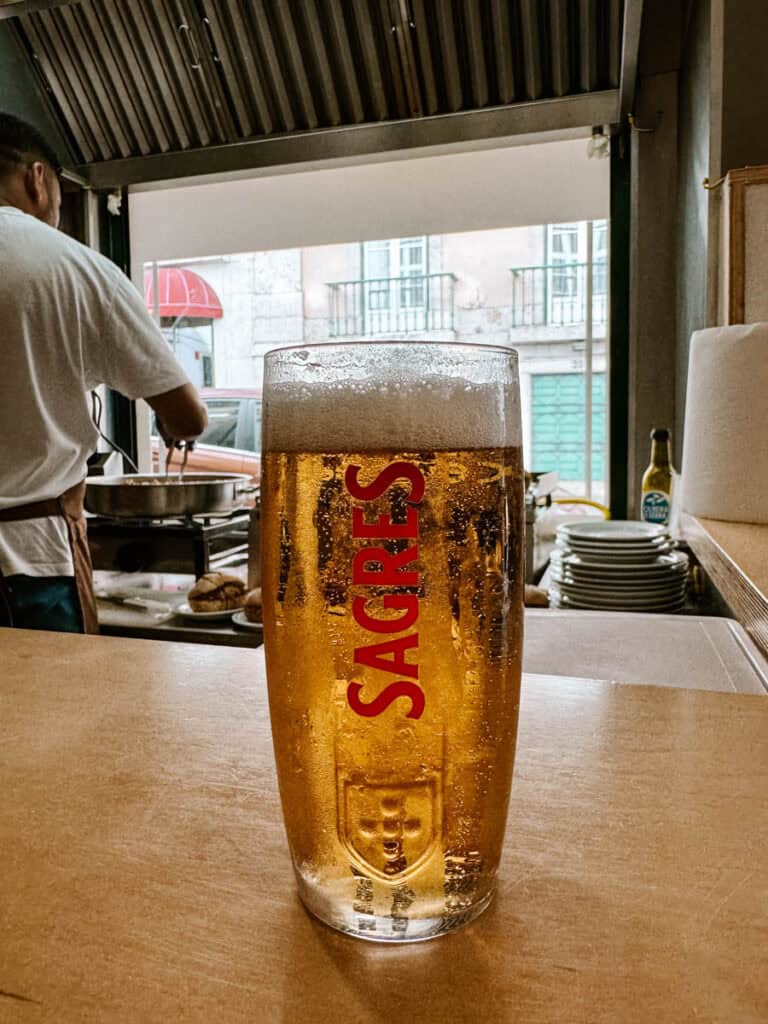
The bifana was served on a soft bread roll, and the sauce made it even more juicy! It was served with an ice-cold Sagres beer. Perfect on a hot day! There were also two condiments on the table: yellow mustard and a spicy homemade sauce. A fantastic start and, honestly, the best bifana I had so far in Portugal!
Caneca da Prata
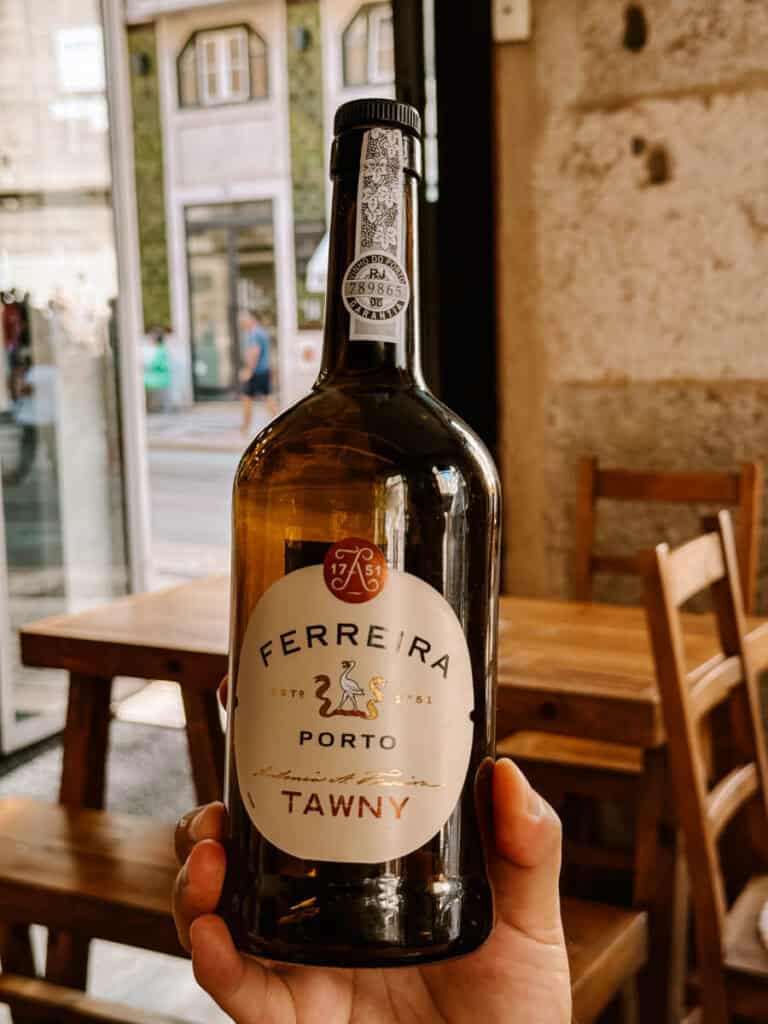
Stop number two was a place where I could happily spend the rest of the day. I am a huge cheese lover! Pair that with a glass of Port Wine, and I am happy. At Caneca da Prata, we were served a lovely Ferreira Port accompanied by bread and cow’s cheese. A superb combination!

As a rule of thumb, you’re in for a treat when the menu is handwritten on the wall. They served plenty of local food, and we would definitely visit again. They serve fresh seafood and Feijoada, for example (bean and meat stew).

Casa Brasileira
We followed the route through the main street of this beautiful city, Rua Augusta. We did not stop at Casa Brasileira, but Filipe, the guide, went in to buy the famous custard tarts. You can try the original Pastel de Belém in the neighbourhood of Belém at Pastéis de Belém. Everywhere else, the custard tarts are known as Pastel de Nata.
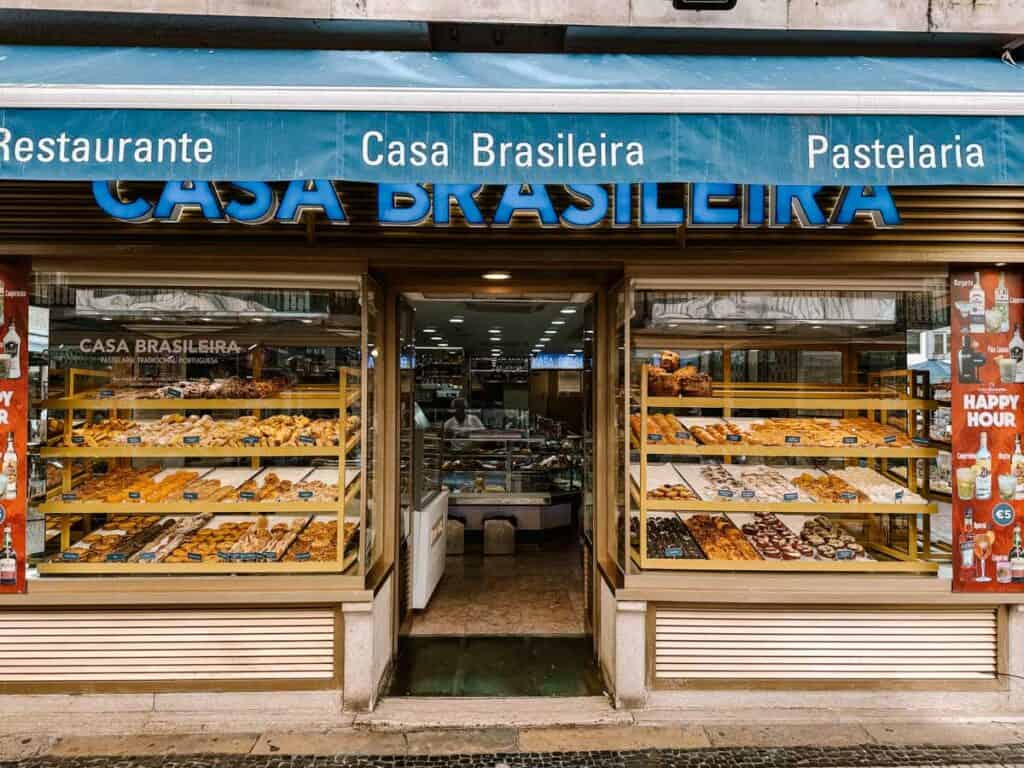
We did not stop here during the Lisbon food tour, but if you have time, it’s a great pastry shop to visit! We sometimes come here for a coffee and something sweet. You’ll see most of the cakes and treats are made with eggs. Some other things to try are Pão de Deus (bread of god), Pão de Ló (sponge cake), and Travesseiros (it means pillow and is a crispy puff pastry).
A Tendinha do Rossio
After a loop, we arrive back at Rossio Square and stop at the local restaurant, A Tendinha do Rossio. Founded in 1840, it is one of the oldest restaurants in Lisbon, and seeing the façade is already worth it. When you walk inside, you step back in time again, and the interior looks amazing!
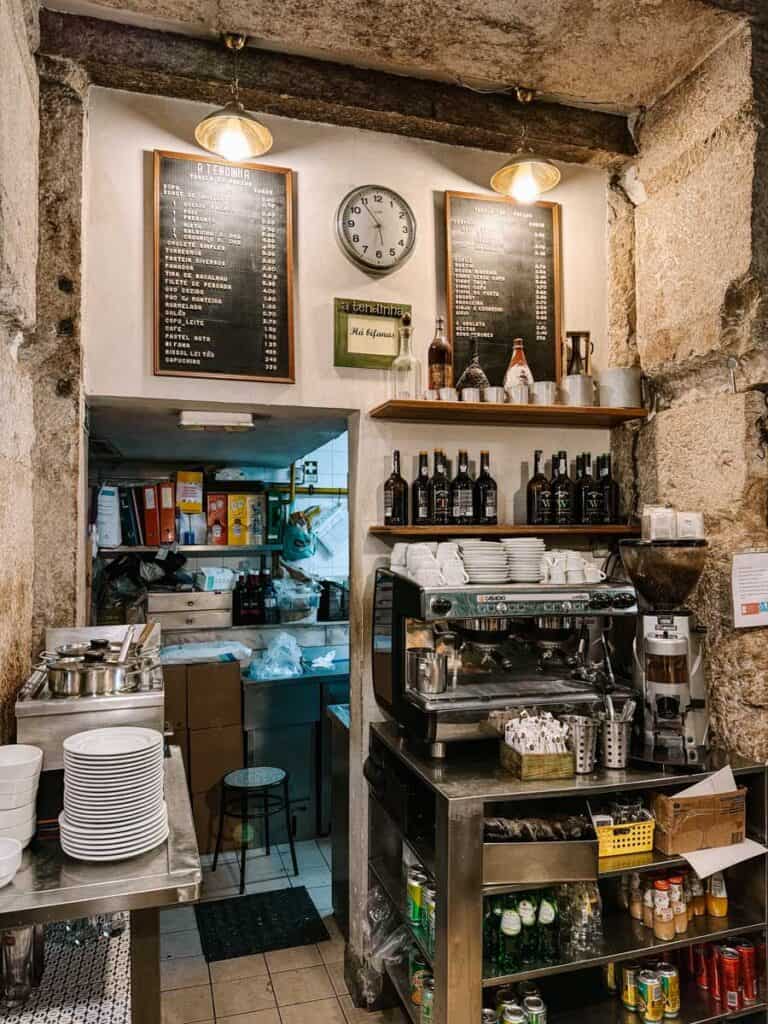
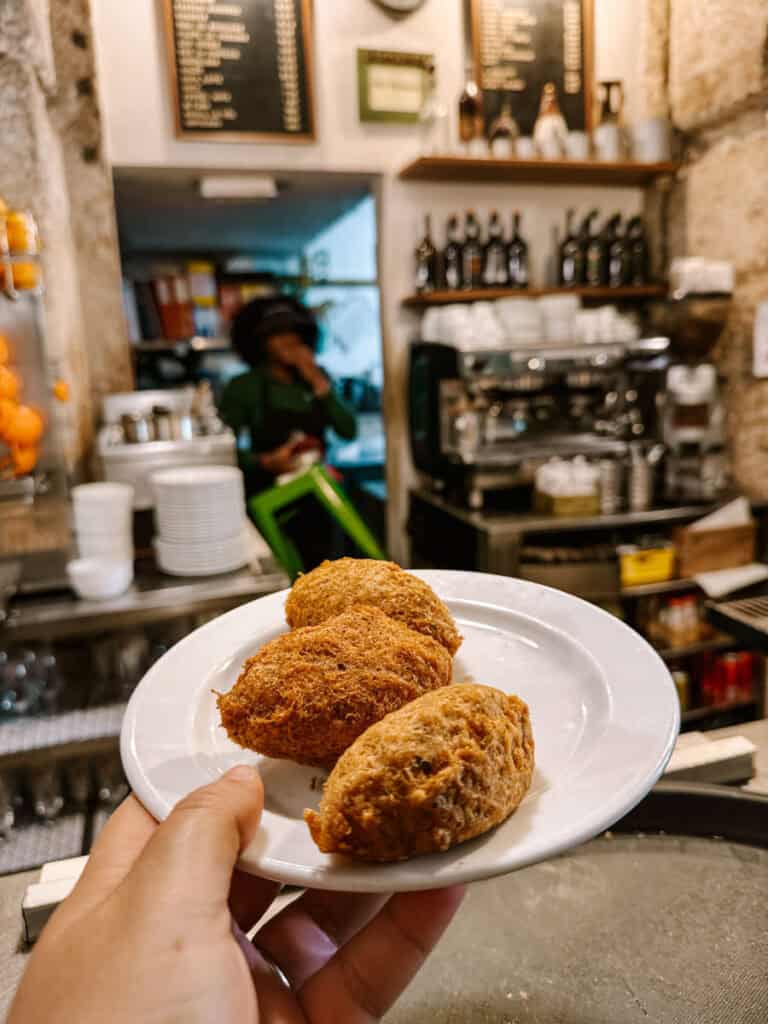
At A Tendinha do Rossio, we tried cod fish cakes and Green Wine. Codfish cakes are pretty self-explanatory. They are made from cod (Bacalhau), potatoes, eggs, parsley, and olive oil. The Pastel de Bacalhau was still warm and super tasty. The Green Wine we tried was the Ponte de Lima.


Green Wine needs more explanation. Vinho Verde DOC, or Green Wine, is not green as the name depicts. It defers to being young, and the wines can be white, red, or rosé. Vinho Verde DOC is usually very crisp and low in alcohol. They can even be slightly bubbly, and the Vinho Verde comes from the Vinho Verde region in northern Portugal.
A Ginjinha
After crossing the square, we arrive at A Ginjinha. Ginjinha is a Morello cherry liqueur made from Morello cherries. Aguardente (strong distilled alcohol) is infused with Ginja cherries and sweetened with sugar.
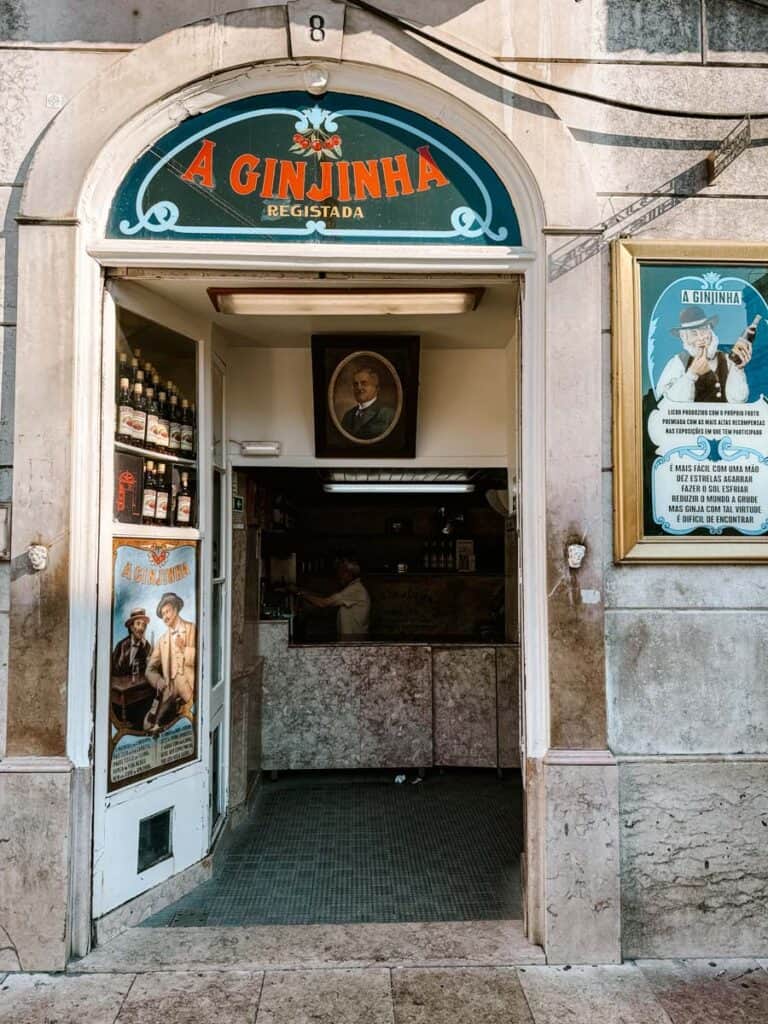
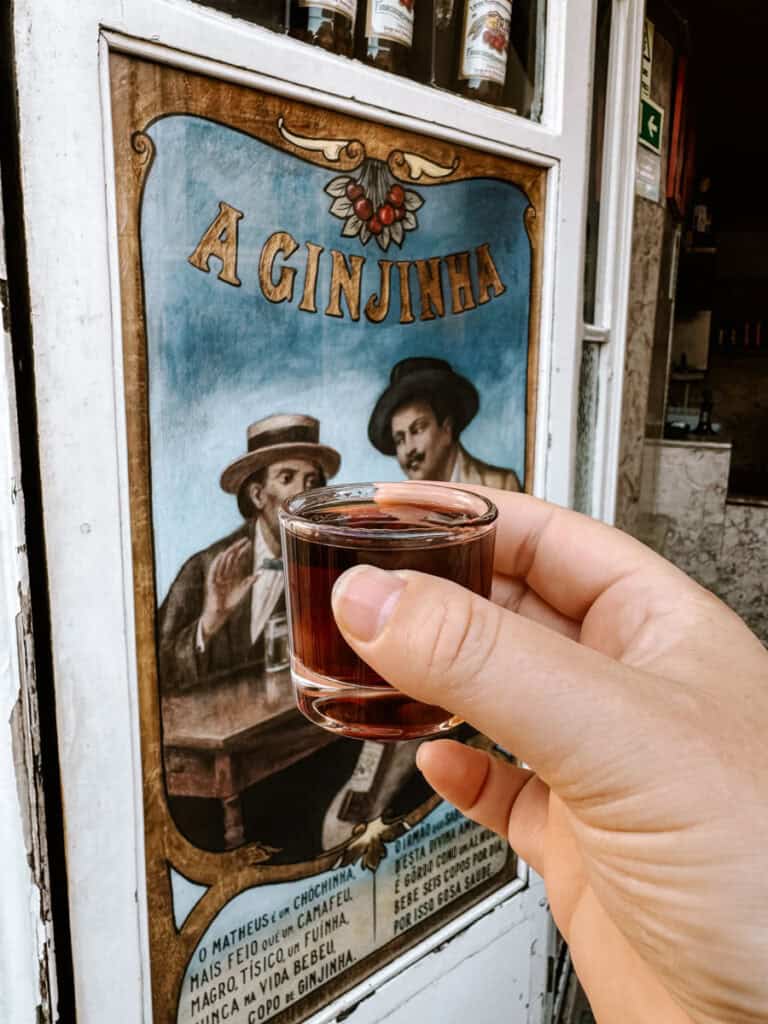
A Ginjinha is the home of this traditional drink, and the small store looks incredible! In 1840, other wines and liqueurs were sold as the oldest factory was in this spot. A Ginjinha opened its doors in 1910, and drinking a Ginjinha became custom.
At A Ginjinha (and the nearby Ginjinha Sem Rival), you can drink the Ginjinha with or without an infused Morello cherry. In Óbidos, Ginjinha is often served in a chocolate cup. When you walk around the Alfama neighbourhood, you might be offered Ginjinha in white or dark chocolate cups on the streets.


After tasting a Ginjinha, we enjoyed the Pastel de Nata before heading to the next spot!
Inhaca
Only a few meters away, we stopped at the restaurant Inhaca, a lovely place where we had enjoyed dinner a few times before. If you want to try some typical food in Lisbon, Portugal, I can definitely recommend this place. Try the Cataplana, for example, a typical dish with seafood, fresh clams, potatoes, and vegetables. There are many versions to choose from!

During the food tour, we stopped for a smaller dish: fish with rice and a glass of white wine. It was a great time around a large table to chat with the other guests. If you are still hungry after the tour, Inhaca is an excellent spot to return later in the evening.
Casa do Alentejo
The last stop of our food tour in Lisbon was Casa do Alentejo. It is (was) a bit of a hidden gem, as many people can’t find the location! It is not easy to see from the street, and you have to walk up the stairs to reach the courtyard.
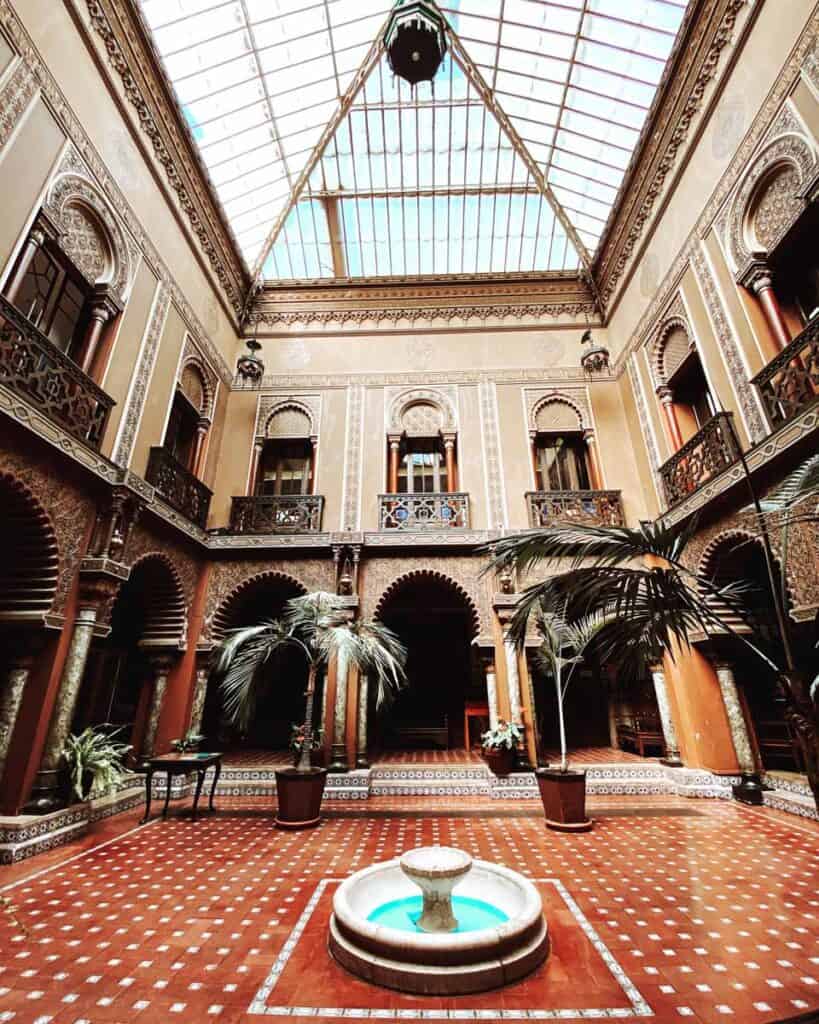
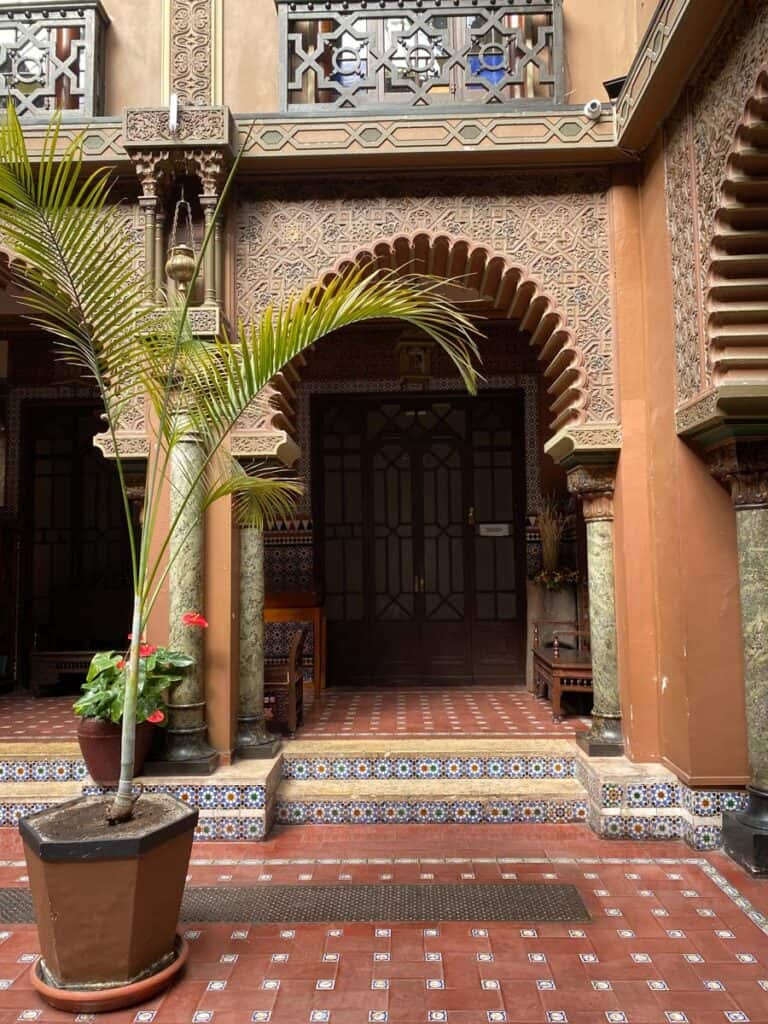
Alverca Palace was built in the 1600s but is now known as Casa do Alentejo. It was once the residence of the Paes de Amaral family but was abandoned in the 1900s. It became a social club for people from the Alentejo region, but it’s now the home of a restaurant and taverna.
Once you step inside, you’ll see the stunning Moorish courtyard. Upstairs, you’ll discover two rococo-style rooms where you can enjoy dinner. We headed to the tavern for another excellent food tasting! On the menu was bacalhau com grão (cod with chickpeas), a typical Portuguese food.

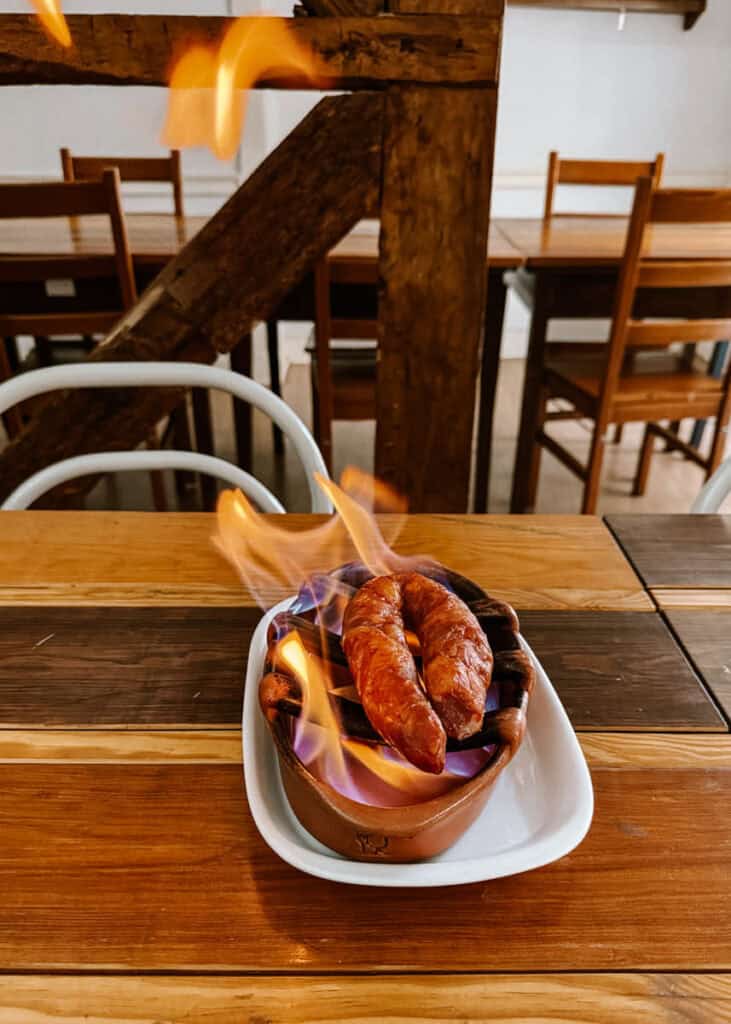

Then, the Chouriço Assado was brought in, still grilling on the fire. The flame-grilled chouriço sausage is less spicy than Spanish chorizo and has large chunks of meat. It was accompanied by more cheese and some red wine—the perfect way to end the best Lisbon food tour!
Tip!
The Portuguese kitchen contains a lot of meat and fish dishes. Most sweets are made from eggs. For that reason, most food tours in Lisbon are unsuitable for vegetarians and vegans. If you have dietary restrictions, contact the tour company before booking.
Other amazing food tours in Lisbon
What are the best food tours in Lisbon? Well, that depends on your taste (pun intended!). We loved the guided tour as Filipe told the stories with a lot of passion, and he had a lot of expertise. We were certainly not hungry afterwards and ate loads, so it counted as our dinner that day. But there are some other food tour options available in Lisbon. Let’s have a look.
Tuk-tuk food tours in Lisbon
Instead of walking, you can opt for a Lisbon food tour by tuk-tuk. It’s a popular way to explore the city as the Portuguese capital is built on seven hills! You can try local wines and Portuguese pastries and taste some small meals.


Segway Food Tour in Lisbon
Another cool way to explore the city is by segway. The Segway Food Tour takes you to the Alfama neighbourhood, where you will dive into history. The groups are small, and you will enjoy tapas, Ginjinha, octopus salad, and many other tasty snacks!
Wine & Cheese Tour
As a cheese addict, a wine and cheese lunch sounds like heaven to me! During this experience, you will taste 6 different wines and try multiple cheeses and charcuterie. My kinda meal!
A Fado Experience
If you want to listen to Fado music while eating, this experience is for you! The focus will be more on the music than the food, but it is a great tour to learn more about the history of Fado music.
Join a workshop!
Want to make custard cakes yourself? Join a pastel de nata baking workshop! The chef will tell you exactly how to make them so you can keep baking them at home! Perfect to learn more about Portuguese gastronomy and culture.
Join a Portuguese cooking class
Is baking not your thing? Then a cooking class might be more interesting! You can create 3 different dishes during this 3-hour cooking class, accompanied by wine, tea, and coffee. Super fun to do alone or with your friends!
Not sure where to go in Portugal?
Take the free Portugal travel quiz and find the destination that best matches your travel style. You’ll get your result plus practical tips to help you start planning your trip.
FAQ
What is the most famous food in Lisbon?
Lisbon has a rich food culture, and there are many traditional dishes and snacks to try. The original Pastel de Belém is from Lisbon and is famous all over the world. You can also try the cherry-like liquor known as Ginjinha.
Is Lisbon a foodie city?
Yes! Portuguese cuisine is world-famous, and Lisbon has some of the best restaurants. You can enjoy a traditional meal in a tasca or splurge on the many modern-style Portuguese restaurants in the city.
What is the best time for a food tour in Lisbon?
A food tour during lunch or dinner is great, as you will have an appetite. You could also do a food tour for breakfast, but with the amount of alcoholic drinks, the morning might not be the best time.
Conclusion
Portuguese cuisine is known all over the world, and custard cakes are definitely one of the most famous! But there is a whole lot more to try, and the food tours in Lisbon are a perfect way to learn more about the local cuisine and Portuguese culture. You’ll explore the culinary backstreets filled with local restaurants!
Wear comfortable shoes during the walking tours and try the best wines and foods. Some highlights will be salted cod, pastel de nata, bifana and seafood. But most food tours in Lisbon also offer alcoholic beverages! Try local beers, Port Wine and some of the best Portuguese wines in the country!
There are many excursions to pick from in the city, so I hope this post clarifies what to expect. Even as Lisbon locals, we loved visiting the local spots and are eager to try another food tour in town! It’s a super fun way to explore this beautiful city.
Other amazing tours in Lisbon:
- A photoshoot in Lisbon with Discover Portugal
- 10 Things to know before booking a fun Tuk-Tuk Tour in Lisbon
- Book a sunset cruise in Lisbon
- Discover the best food tours in Lisbon!
- Discover Lisbon by bicycle with Baja Bikes
- Discover the hop-on-hop-off Lisbon tour buses
- 20+ Best tours in Lisbon Portugal
Discover more food experiences in Portugal
Pin to read later!