The Discover Portugal blog contains affiliate links. If you make a purchase using one of these links, we may receive compensation at no extra cost to you. See the Disclaimer for more information.
Beautiful paradise of Ria Formosa Natural Park in Algarve

There are many reasons why you should visit Ria Formosa Natural Park, especially if you love nature! This unique ecosystem is located along the Algarve coast in southern Portugal. It’s a favourite spot for migratory birds, but there are also paradise beaches where you can spend a day.
It’s one of my favourite places in the Algarve and one of the best nature spots in the country. There are also many activities, so active travellers will love it here! Let’s take a closer look at what to see and do at the Ria Formosa Algarve!
What to expect at the Ria Formosa Portugal?

Not sure where to go in Portugal?
Take the free Portugal travel quiz and find the destination that best matches your travel style. You’ll get your result plus practical tips to help you start planning your trip.
What is the Ria Formosa Natural Park, and where is it?
The Ria Formosa Portugal is a natural park in the south of the country. It’s located in the Algarve region and is much loved by nature enthusiasts. Ria Formosa Natural Park stretches from Garrão to the west of Faro, all the way to Manta Rota near the Spanish border.
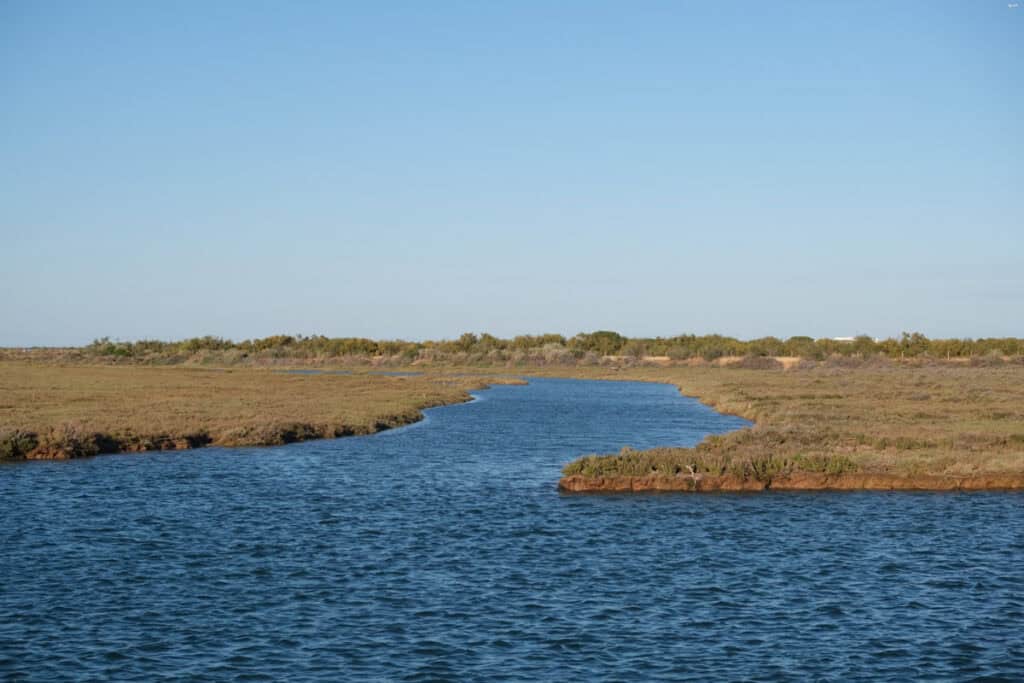
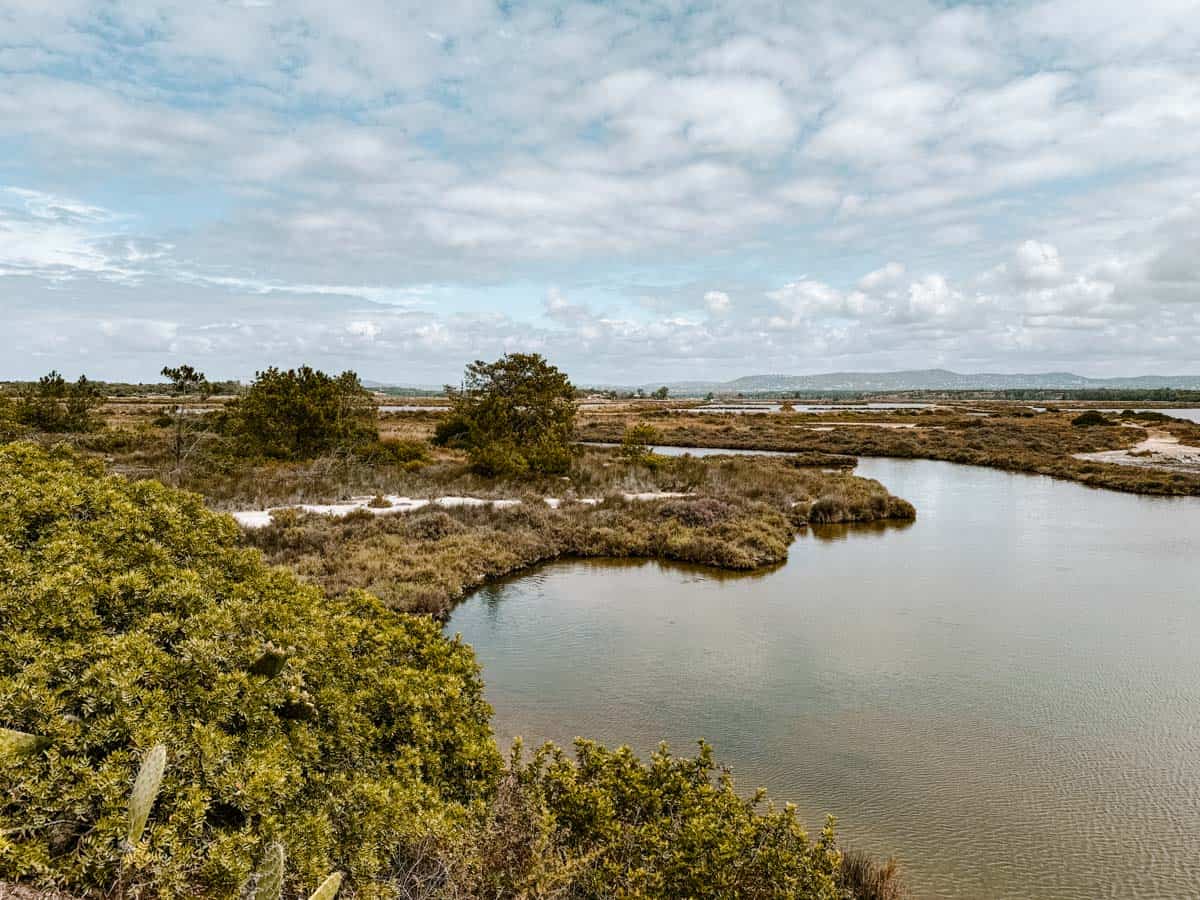
It was formed 18.000 years ago, and sand areas were created along the Algarve coast. The Ria Formosa is an estuary with marches, islands with sandy beaches, salt pans and canals.


The coastal lagoon is always changing, and it’s one of the most important wetlands in Portugal and even of international importance. Ria Formosa Natural Park has incredible biodiversity, and migratory birds love spending time here during their travels. The Porphyrio porphyrio, better known as the purple swamphen bird, is the symbol of the nature park.
Ria Formosa Map
What is the Formosa barrier island system of Portugal?
The lagoon’s average depth is 2 meters, and the barrier-island system protects the area from waves. Ria Formosa has tides, which make this area unique during every visit! The Ria Formosa Natural Park stretches over 60 kilometres, and the lagoon, tidal channels, and marshes total 18.000 hectares. Six tidal inlets separate the five islands and two peninsulas. There are also some beautiful villages along the coast that you can visit!
Fun Fact!
The lagoon was recognised as one of the Portugals’s seven natural wonders in 2010!
Tours and things to do at the Ria Formosa Faro
Tourists who love nature will have an incredible time in Ria Formosa Natural Park. There are many ways to enjoy this natural wonder in the Algarve! Most excursions to the Ria Formosa depart from Faro, the region’s capital. You can rent bikes in the city centre and discover some fantastic cycling trails, but a guided cycling tour is also an option. Or visit the nature park by Segway!
From the water, you can enjoy a totally different experience. Active travellers can hire a kayak to explore the lagoon. But you can also book boat tours year-round! You can also join a Ria Formosa islands boat tour or even spot dolphins on boat tours that head over to the waters of the Atlantic Ocean!


We joined a special bird-watching boat tour on a solar boat. We docked at a protected area on Ilha Deserta to see some unique remaining nesting grounds and sailed past the barrier islands. The guide was very knowledgeable and provided us with binoculars. The guide explained a lot about bird species and why it is a favourite wintering place of various species.
Hiking at Ria Formosa Natural Park
As much as we loved the boat tour, hiking remains one of our favourite things to do in the Ria Formosa! For example, park your car near the Faro airport landing strip and discover the Ludo Trail. We used AllTrails to follow the route, which is around 7 kilometres (4.34 miles), but you can extend it if you like. It takes around 3 to 4 hours to complete, and there is a lot to see along the way.


When we started, the tide was low, and we saw many crabs in the wetlands! The landscape is super diverse, and you’ll see marshes, salt pans, and many birds! We spotted numerous species, such as flamingos, the Iberian Magpie, the Eurasian Hoopoe, the Egret, the Little Tern, and the Blackcap! There are several bird-watching stations where you can enjoy birdlife to its fullest!


Another favourite spot to hike is near Cacela Velha. This tiny village is a true hidden gem, but popular amongst locals. You can walk to the beach from the town when the tide is low. With high tide, local fishermen can take you across by traditional boat. Ilha de Tavira is also an excellent spot for a long beach walk along the sea!


Beaches at Ria Formosa Portugal
There are some incredible paradise beaches to discover at Parque Natural da Ria Formosa, Portugal. You can find this on the islands and the two peninsulas. From east to west, they are Península do Ancão, Ilha da Barretta or Ilha Deserta, Ilha da Culatra, Ilha da Armona, Ilha de Tavira, Ilha de Cabanas and Ilha da Cacela.


From Faro, you can board a ferry boat to reach Ilha da Barretta and Ilha da Culatra, for example. There are also guided day tours that drop you off at many beaches so you can explore more!
You can take a boat from the village of Fuseta to Ilha da Armona. Praia da Fuseta has fantastic facilities, and the beach is huge! The same goes for Ilha de Tavira, which you can reach by boat from Tavira. But you can also park your car near Pedras de El-Rei and cross the bridge towards Praia do Barril! You can take a train or walk to the beach, with an anchor cemetery in the dunes!
How to access Ria Formosa?
There are several towns with access to the Ria Formosa, and they are all worth visiting! Besides the capital Faro, they are Olhão, Fuseta, Luz, Santa Luzia, Tavira, Cabanas, and Cacela Velha. Some have direct access to the islands, but you’ll need to take a boat from others. Let’s have a closer look at your options.
By car
Renting a car in the Algarve is a fantastic idea for travelling off the beaten path! You can rent a car in Faro or at Faro Airport, and we always rent our cars through DiscoverCars. You can easily find the right vehicle with many trusted car hire companies!

We usually go for Hertz, Europcar, or Sixt. You can easily explore the Algarve region from east to west and stop at the tiniest villages and remote areas. You can park near the Ria Formosa and continue on foot or by ferry.
By ferry
There are multiple places at which you can board a ferry. Faro has the most options for boats travelling to the islands, and some tours will bring you to Ilha Deserta, Ilha do Farol, and Ilha da Culatra, for example. From Olhão, you can take a ferry to Ilha da Culatra, and from Olhão and Fuseta, you reach Ilha da Armona in no time.
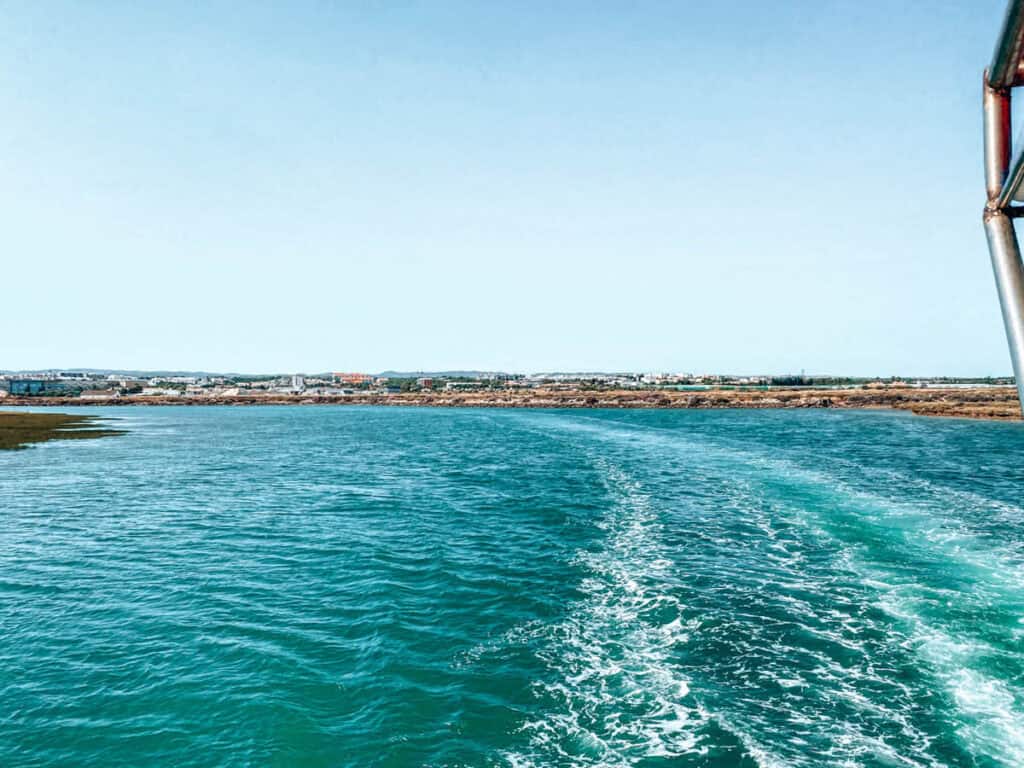
In Santa Luzia, you can take a ferry to Praia da Terra Estreita. Boats in Tavira run to Ilha de Tavira, and from Cabanas, you can easily travel to Ilha de Cabanas. Did you miss the ferry? There are also water taxis between the islands for a higher price.


By foot and bicycle
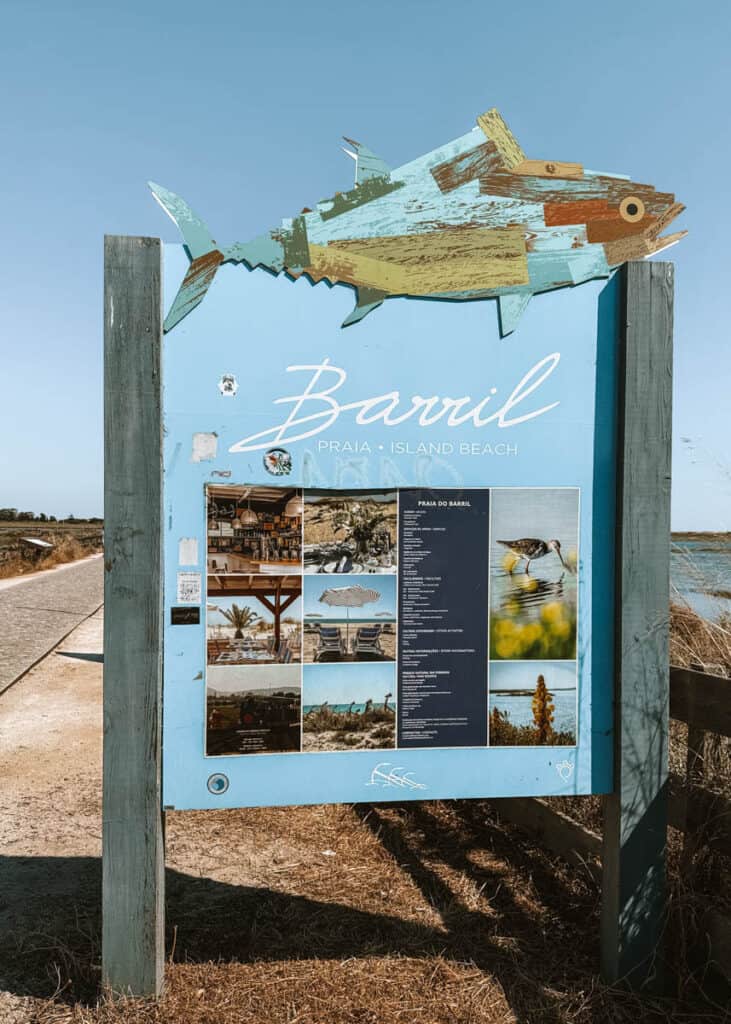
There are certain areas and beaches that you can reach by road or footbridge. Ponte da Quinta do Lago is perfect to reach Praia da Quinta do Lago near the San Lorenzo Golf Course. Near the airport’s landing strip, you can cross the Ponte Praia de Faro to Praia de Faro. The Trilho do Barril route will take you to Praia do Barril, and with low tide, you can walk to Praia de Cacela Velha.

Public transport
Even if you don’t have a car, you can explore the Ria Formosa. There are buses between the villages, but another unique to travel is by train. The Algarve train line follows a coastal route. It stops at all towns between Faro and Vila Real de Santo António. You can purchase tickets at the train station or online on the Comboios de Portugal website, CP for short.


What is the best time to visit the Ria Formosa Natural Park?
The Ria Formosa Natural Park is fantastic all year round. The high summer season is a popular time to visit the beaches, but this is also the busiest time of year. If you prefer the Algarve without crowds, any time from September through to May/June will be ideal. The temperatures will also be colder, although the region has a lovely climate even in winter.
From autumn to spring, you can spot many species of birds! You can spot flamingos all year, but they are easy to see, especially in the morning and evening. They love the areas near the salt pans with low tide. Other bird species come to Ria Formosa at specific times during the migration. Especially spring and autumn are perfect for wildlife spotting!
Which birds live in Ria Formosa?
Bird watchers much love the Ria Formosa, and for good reason! The Little Egret, Spoonbill and Stork might be common, but some species are rare.

Black-winged Stilt


Little Tern
Over 200 species have been recorded at the Ria Formosa Algarve, and spring and autumn are especially perfect for birdwatching. Of those, over 100 are breeding species, and 45 are residents.

Black redstart

Black-winged Stilt
Other birds you might spot are the Peregrine Falcon, Marsh Harrier, Oystercatcher, the Little Tern, the Mediterranean Gull, the Glossy Ibis and the Purple Swamphen. Not sure where to start? Join a birdwatching tour!
Please stay on the paths and designated areas wherever you go to leave the animals in peace. It is important to be careful, especially during breeding season!
Tip
Near Castro Marim, you can spot more birds! The wetlands have fabulous trails and you can even enjoy a mud bath to rejuvinate!
Can I see marine animals at Ria Formosa Nature Park?
There are also several marine animals to keep an eye out for. At sea, you might spot dolphins, whales and sharks! There are thousands of bottlenose dolphins along the Algarve coast, and they are the most common to spot.
However, some protected species are harder to discover. One example is the sea horse, whose populations have shrunk significantly over the years.
Did you know…
The Portuguese water dog is a typical dog from this region! These dogs used to help the fishermen, and you might see some of them during your holiday!
Flora at Ria Formosa
Besides the unique fauna, you’ll also see some colourful flowers, plants, and trees along the way. There is some unique marshland vegetation, which is critical to the environment as it absorbs pollutants! You will spot Cordgrass, Salicornia, and Grand Statice, for example. And the Yellow Broomrape is beautifully decorating the landscape!


In the forests, you can spot pine trees, gorse and lavender. And in spring, you might even spot orchids blooming! The dunes are home to species such as the Curry plant, Sea holly and Cottonweed.
Where to eat near the Ria Formosa?
With its close proximity to the sea, it’s no surprise that many restaurants offer shellfish and fish on the menu. Try a fish soup, a seafood cataplana, or sardines. Besides fish, the Portuguese kitchen also contains many meat dishes, such as piri piri chicken, sausages, and Frango da Guia. In recent years, the number of vegetarian and vegan restaurants has also been rising.
In Faro, you can enjoy a meal at restaurants like Vila Adentro and Cantinho. In Fuseta, we enjoyed a tasty meal at Casa Corvo. Tavira has incredible restaurants like O Tonel, Restaurant Nó de Gosto, Pitanga, and Aquasul. There are also some beach bars on the islands where you can grab a bite to eat.

Hotels around the Ria Formosa
The Ria Formosa Natural Park is a unique area to stay during your vacation! You can book a hotel in cities and towns like Faro, Tavira and Monte Gordo, but you can also go camping! I’ve outlined three options to suit every budget, but you can also use the map below to find an amazing place to stay!
📍Ria Formosa camping: There are several camping spots near the Ria Formosa, but glamping is another option! Discover the Glamping on Organic Yoga Farm in Moncarapacho and enjoy a stay in a luxury tent. There is a natural swimming pool, and yoga classes are offered on-site.
📍Mid-range gems: Casa Castor, Fábrica in Cacela Velha offers incredible sea views! It’s only 100 meters from Fabrica Mar Beach, with direct access to Ria Formosa. The apartments have a fully equipped kitchenette, which is great for a longer stay. The air conditioning keeps the rooms comfortable in the heat of summer.
📍 Luxury hotel near Ria Formosa: The Wyndham Grand Algarve is located next to the Ria Formosa and the San Lorenzo Golf Course and is one of Portugal’s largest golf resorts. From the golf course, you can enjoy many hiking trails to the São Lourenço Bird Hide and many more. The 5-star hotel has two swimming pools, a spa and four restaurants.
Not sure where to go in Portugal?
Take the free Portugal travel quiz and find the destination that best matches your travel style. You’ll get your result plus practical tips to help you start planning your trip.
FAQ
How do I explore Ria Formosa?
The Ria Formosa Natural Park is perfect for active travellers! There are many hiking trails, and cycling is also possible. Some parts of the Ria Formosa are accessible by car, and public transportation is also available. There are buses between the towns, and there is a train route along the coast.
Can you swim in the Ria Formosa?
There are some places near the Ancão Peninsula where people swim in the Ria Formosa. Praia da Fuseta Ria is another spot where people swim, but most will prefer fresh seawater for a dip in the ocean.
How big is Ria Formosa?
The Ria Formosa stretches over 60 kilometres between Garrão in the west and Manta Rota in the east. Its total area is over 18,000 hectares.
Conclusion
The Ria Formosa should be at the top of your list for travellers who love nature and prefer peace! You can visit a stunning beach in summer and discover many birds in all seasons. Enjoy a boat tour between the barrier islands or take a refreshing dip in the sea. You can also find stunning hiking and cycling trails that are very flat and accessible to most people. After exploring nature, you can visit many of the cute fishing towns along the coast. Enjoy dinner and a glass of wine in the many restaurants and stay in a hotel near this beautiful spot!

Discover more amazing places in the Algarve Region!
- 30x amazing things to do in Faro, Portugal
- 25x The best things to do in Lagos, Portugal
- 15x Best things to do in Tavira, Portugal
- How to visit the Benagil Cave Algarve + Best Tours
- Visit the beautiful paradise beach at Cacela Velha
- Visitor guide with tips for the beautiful Algar Seco
- The beautiful paradise of Ria Formosa Natural Park in the Algarve
- Beautiful views at Praia da Marinha beach Algarve
- Discover the beautiful town of Monchique
- Discover the colourful town of Ferragudo in the Algarve
- How to reach Praia do Barril Beach and the Anchor Cemetery
- Fuseta: A guide to beaches, food and activities
Pin to read later