

The Discover Portugal blog contains affiliate links. If you make a purchase using one of these links, we may receive compensation at no extra cost to you. See the Disclaimer for more information.
Discover the Sado River and Estuary for a day of bird and dolphin watching

The Sado Estuary Natural Reserve, or Reserva Natural do Estuário do Sado in Portuguese, is a nature reserve near Lisbon. Following the A2 or A12, you reach the Sado River in under an hour.
My dad is an avid bird-watcher, and each time my parents visit, we discover more bird-watching places near Lisbon and the rest of Portugal. We have come here a few times now to see flamingos and other birds, and I will happily share these experiences.
If you love nature, visiting the Estuary and the Sado River is a must, and in this article, you’ll learn more about the sights and which places you can visit!
This Sado River and Estuary Guide includes:

Not sure where to go in Portugal?
Take the free Portugal travel quiz and find the destination that best matches your travel style. You’ll get your result plus practical tips to help you start planning your trip.
What is the Sado River and the Sado Estuary Natural Reserve
Rio Sado, or the River Sado, is a 175-kilometre-long river in Portugal. It’s the only river in Portugal that flows from south to north and is one of the major rivers in the country. Rio Sado springs in the hills around the village of Ourique and makes its way northerly towards the Sado Estuary Nature Reserve. There, it enters the Atlantic Ocean, close to the coastal city of Setúbal.

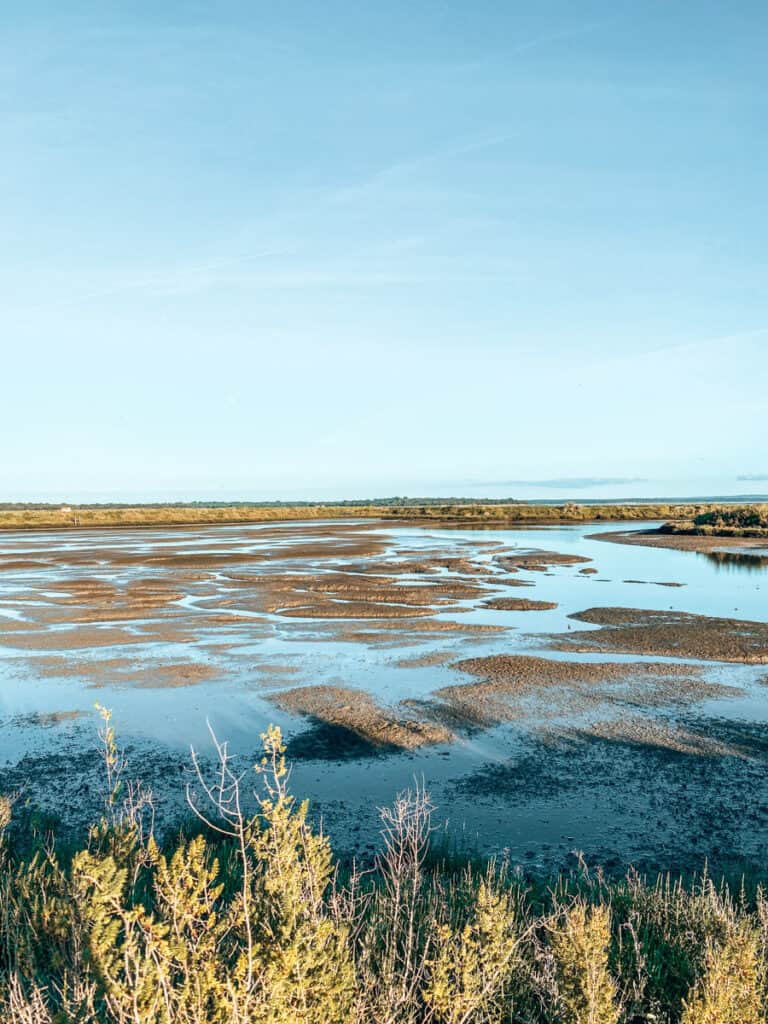

Reserva Natural do Estuário do Sado, or the Sado Estuary Nature Reserve, is 239.71 km2 and is one of 30 nature reserves in Portugal. The landscape contains the Sado River, marshlands, sand banks, and salinas (salt pans). It’s no surprise Reserva Natural do Estuário do Sado is a favourite spot for birds, and many different species can be spotted here.
Sado River Map with things to do
Sado River Ecotourism
The Sado River and the Sado Estuary are a paradise for nature lovers. Ecotourism is thriving here, and many options are described below. The Mourisca Water Mill (Moinho de Maré da Mourisca in Portuguese) is a good starting point.


Inside, you’ll find a small museum about the mill, and from the small docks, you can embark the boats. There are several walks around the mill from where you can spot many birds. Let’s have a look at all options!

Sado River boat excursions
A Sado River boat tour is one of the most popular excursions around the Sado Estuary. The excursions are perfect for spotting dolphins and birds. Sado tours leave from Troia, Setúbal, and the Mourisca Water Mill. Let’s have a look at the different options.

Sado River bird-watching
Especially in winter, Reserva Natural do Estuário do Sado is a favourite spot for birds. You’ll spot a large community of waders, flamingos, kingfishers, rails, and herons. At the Mourisca Water Mill, bird leaflets and books are available, so you know which ones to spot. Don’t forget to bring binoculars or a camera! You might want to take many photos or see the birds up close.


Boat excursions depart from the docks during high tide. It’s best to make a reservation beforehand to know which timetable is applicable. Tip: Call Carlos Migues on (+351) 910723964 to reserve your spot or check their site MiraSado.


Bird-watching excursions also depart from the docks in Setúbal. Most boat tours last around 3 hours; your guide will point out many birds along the way.
Wild dolphins at the Sado Estuary
The Sado Estuary is home to 30+ bottlenose dolphins, a unique phenomenon! This colony is one of only three colonies in estuaries in Europe! There are multiple boat tours that allow you to observe the Sado dolphins without disturbing them.
A boat tour on the Sado River is a fabulous way to discover Costa da Serra da Arrábida and Tróia. The bottlenose dolphins are wild animals, and it’s not 100% given that you will see them. The success rate, however, is high, and it will be an unforgettable experience. Most tours last 2.5 to 3 hours and depart from Tróia and Setúbal.
Alcācer do Sal
The Sado River crossed the town of Alcācer do Sal on its way north. The picturesque town is part of the Setubal District, and settlements have existed there for the last 40,000 years! During the Mesolithic Period, people started to settle around the region. So, to say Alcācer do Sal is a historical city is an understatement!
The medieval town has several sights, such as the Castelo, which now hosts a fascinating archaeological museum. There is also a gorgeous pousada where you can stay the night!

Another interesting sight is Torre do Relógio, which has a beautiful view over the Sado River. From the village, you can also easily reach Praia da Comporta, a favourite beach of many on the Tróia Peninsula. Other stunners are Praia da Malha da Costa, Praia do Carvalhal, and Praia da Galé – Fontainhas.
Road trip suggestion for the Sado Estuary
Start your journey in Alcácer do Sal and follow the road towards Batalha, Comporta, and Costa de Galé. You’ll have the opportunity to stop at some beaches here, and it’s a great way to discover the Tróia Peninsula.

From Tróia, you can take the ferry to Setúbal. You can enter the ferry by walking, biking, or driving. Then, continue your journey to the Mourisca Water Mill for a short hike or a boat tour on the river Sado before returning to your accommodation. Need help with car rental in Portugal? Read the complete guide.
Combining the Sado River with Parque Natural da Arrábida
Not far from the Sado Estuary is another nature park. Parque Natural da Arrábida is located on the other side of Setubal, and you can visit both areas in one day. Arrábida Nature Park is full of gems such as Portinho da Arrábida, the winemaking village Azeitão, the Convent of Our Lady of Arrábida, hills for hiking, beaches for swimming, and Espichel Cape on the Atlantic Coast.


Other things to do close to the Sado River
A list of things to discover south of Lisbon:
- The city of Setúbal
- Palmelo Castle (you can sleep here also!)
- Convent of Our Lady of Arrábida
- Praia de Galapinhos
- Portinho da Arrábida
- Praia dos Penedos (hike)
- Castelo de Sesimbra
- Sesimbra town
- Cabo Espichel
- The Tróia Peninsula
How to get to the Sado River and Sado Estuary
The Sado River and estuary are close to Lisbon. You can take an epic drive over the Ponte 25 de Abril bridge from the city centre and follow the A2 towards Setúbal. If you take the 17-kilometre-long Ponte Vasco da Gama bridge, you follow the A12 to Setúbal. Both routes take less than an hour to get to the Sado Estuary and the southern region of the capital.
Another option is to take a bus or train to Setúbal. The easiest way, however, is by car if you wish to spend time in nature. Cycling and hiking are also options, and (aside from Parque Natural da Arrábida, which is hilly) the roads are flat. Need a car? Take a look at car rental prices below with DiscoverCars and book your spot!

Tours from Lisbon
If you don’t have a car but still want to spot dolphins and enjoy a day in nature close to the sea, there are some excursions that depart from Lisbon. Most excursions go to Arrábida Natural Park, not the Sado River. If you specifically want to enjoy a tour of the Sado Estuary, I recommend booking a private tour.
Hotels near the Sado River
With so many things to do in the area, it’s worth staying the night. If you like a city vibe, Setúbal and Sesimbra are lovely. If you want to be surrounded by nature, there are fantastic options for you along the estuary. You can even book accommodations close to the sea!
You can sleep in a tent close to the water at COMPORTA SIDE. What a way to wake up with the sound of birds! Or enjoy a luxury stay at Pestana Troia Eco-Resort & Residences on the peninsula. Rio Art Hotel, PÊPA Guesthouse, and Preia-Mar are fabulous when you want to stay in town.
Not sure where to go in Portugal?
Take the free Portugal travel quiz and find the destination that best matches your travel style. You’ll get your result plus practical tips to help you start planning your trip.
FAQ
Where is the Sado River?
The River Sado starts near Beja in the Alentejo region of the Serra da Vigia. It flows north and ends in the sea, close to Setúbal.
Is a visit to the Sado River worth it?
Yes, especially if you like nature. The area is known for its stunning landscape, and bird lovers enjoy coming here. You can also find dolphins in the Sado River!
Are there excursions from Lisbon to the Sado River?
There are some excursions from Lisbon, but most visit the nearby natural park Arrábida instead. It’s easiest to rent a car.
Conclusion
As much as cities are lovely, an ‘escape’ to nature is sometimes fantastic. At Estuário do Sado, you can go hiking, cycling, dolphin watching, and visit many other places nearby. The Sado River and Sado Estuary are perfect if you’re close to the Portuguese capital, and it’s one of the best spots for bird-watching in the country!
For more nature, don’t miss Parque Natural da Arrábida and its stunning beaches. Discover towns like Sesimbra and Setúbal or go wine tasting in Azeitão. Don’t forget to bring your camera, as you’ll take many photos during the day!

Beautiful places south of Lisbon
- Things to do at Serra da Arrábida Natural Park, a natural paradise
- Discover the Sado River and estuary for a day of bird and dolphin watching
- Cabo Espichel: stunning views, a lighthouse, the sanctuary and ancient dinosaur tracks!
- Visit the stunning Sesimbra Castle, the place to overlook the Setúbal peninsula
- 25 Beautiful and best things to do in Setúbal
- From Lisbon to Évora, discover 20+ things to do
Pin to read later!


