

The Discover Portugal blog contains affiliate links. If you make a purchase using one of these links, we may receive compensation at no extra cost to you. See the Disclaimer for more information.
Inside the National Pantheon Lisbon, and beautiful views over Alfama

The Lisbon National Pantheon is literally in my backyard. We live on the edge of Alfama, and seeing the Panteão Nacional on a daily basis still warms my heart.
The beautiful building looks much older than it is, and many tourists only see the structure from the outside! But if you have time to visit inside, you’ll quickly see that seeing the National Pantheon in Lisbon is well worth your time.
In this post, I’ll explain everything there is to see, which tombs you can find inside, and show you the views from the dome. You’ll appreciate visiting the Lisbon Pantheon, especially if you like history and architecture.
Overview of the National Pantheon Lisbon Portugal

The history of the National Pantheon in Lisbon
Did you know it took so long to build the Panteão Nacional in Lisbon that it’s the longest monument ever completed in Portugal? Construction of the Church of Santa Engrácia started in the 16th century due to the wishes of Princess Maria (daughter of King Manuel I of Portugal and Eleanor of Austria), and the dome was completed in 1966.


It took more than 300 years to finish the church! No wonder people often say the popular expression, “It’s a job like Santa Engrácia,” when something takes forever. Ultimately, Igreja de Santa Engrácia on Campo de Santa Clara was never used as a church.
Igreja de Santa Engrácia is built on the foundations of an earlier church. This church was torn down in 1630 after being trashed by a robbery. The story goes that a Jewish man was blamed for the theft, and he got executed. Before the death of the innocent man, he cursed the church. Hence, it took many years to complete.


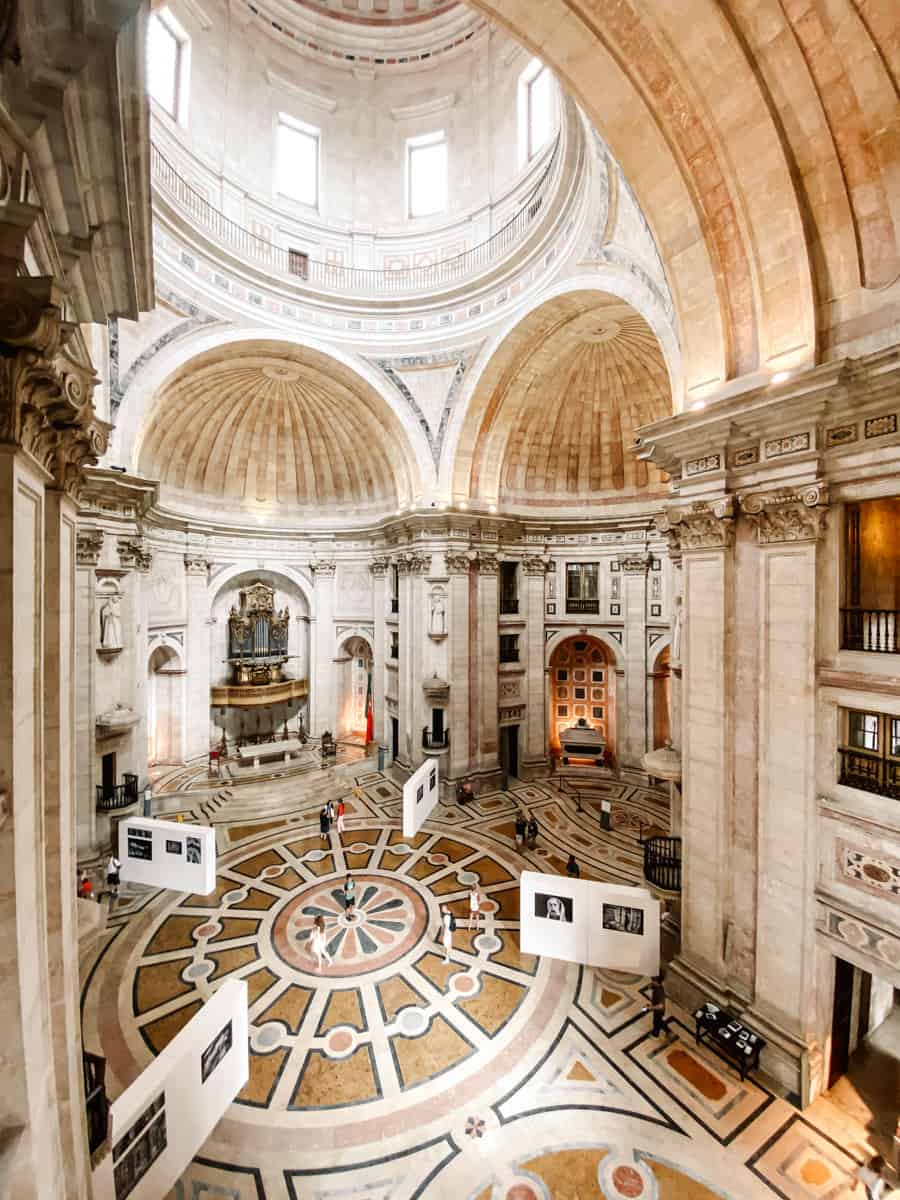
Since 1916, the Church of Saint Engrácia has been known as the National Pantheon, the first baroque monument in Portugal. The building was inspired by the Basilica di San Pietro in Vatican City in Rome and designed by royal architect João Antunes. The multicoloured marble interior and the huge dome have many similarities.

What to see inside the Lisbon National Pantheon
You enter the Panteão Nacional through a beautiful baroque portal. Here, you will see two angels holding the Portuguese coat of arms. The church has a Greek cross plan, and you have an incredible view of the majestic dome from the centre. You can explore the rest of the interior from the central nave and visit the mausoleum.


Some tombs surround the centre at the Greek Cross. You can find other tombs in the small rooms on each side of the National Pantheon. In the centre, you see the high altar with the organ made by the Portuguese school of Joaquim António Peres Fontanes.


You can also climb up the stairs and visit the fantastic terrace around the dome. From the outside balcony, you have a stunning view of Lisbon, the Tagus River and Alfama, the oldest neighbourhood in the city.
Who is buried at the Pantheon in Lisbon?
The National Pantheon holds the tombs of many famous Portuguese people. Examples are navigator Vasco de Gama (buried in the Jerónimos Monastery in Belém), Queen of Fado Amália Rodrigues, footballer Eusébio da Silva Ferreira, Infante D. Henrique (Prince Henry the Navigator, buried at the Batalha Monastery), Aquilino Ribeiro, and poet Luís de Camões (buried in the Jerónimos Monastery in Belém).
National Pantheon Lisbon tickets
Do you want to see this beauty for yourself? Tickets for the National Pantheon are € 10,00, and you can buy a ticket online. Buying your tickets online will give you fast-track access to the National Pantheon in Lisbon. Children between 13 and 24 pay € 5,00, and younger children can enter for free.
Free with the Lisboa Card
Lisboa Card holders can discover the monument for free. You can also use public transport, and you can enter other monuments and sights free of charge. Examples are São Jorge Castle, The National Tile Museum, the Belém Tower, and the Jerónimos Monastery.
Opening times
The National Pantheon in Lisbon is open from Tuesday to Sunday from 10 AM until 6 PM. The site is closed on Mondays.
How to get to the Lisbon National Pantheon
The Pantheon is located on Campo de Santa Clara in eastern Lisbon. The closest train and metro station is Santa Apolónia. It’s a bit of a steep climb up, but well worth it! If you come by tram, you can ride the famous Tram 28, which stops very close to the national monument.
Other things to do in Alfama
Lisbon’s National Pantheon is located on the edge of Alfama, in São Vicente. Every Tuesday and Saturday, you can visit the Feira da Ladra (Thieves Market) flea market here! The fleamarket is next to the Pantheon and near the Igreja de São Vicente de Fora.
In the heart of Alfama, you can visit the famous Fado Museum, the viewpoint of Miradouro de Santa Luzia, and Castle São Jorge. If you’d like to see another church from the inside, you can visit Sé de Lisboa, the oldest remaining cathedral in Lisbon.
🌟 Buy a combination ticket to visit Lisbon Cathedral and the Panteão Nacional
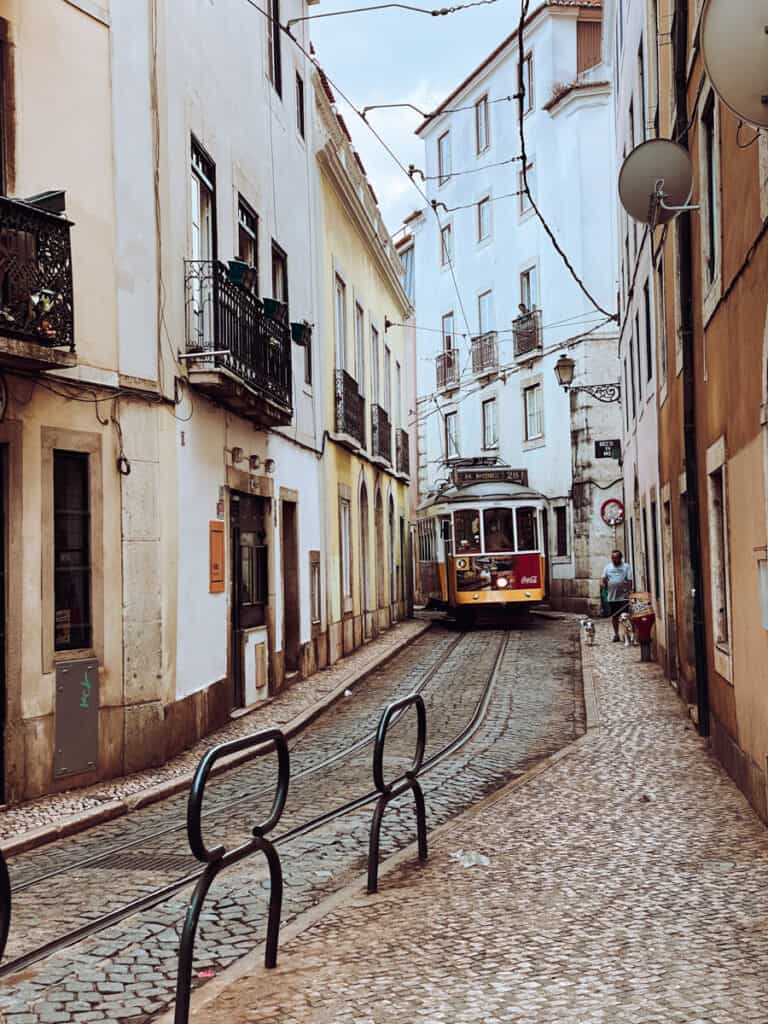


For the best views in Lisbon, you can visit Miradouro da Graça and the highest of all, Miradouro da Senhora do Monte. Do you want to stay for dinner in the oldest neighbourhood of Lisbon? Then it’s recommended that you enjoy a Fado show in Alfama.
FAQ
Who is buried in the National Pantheon Lisbon?
The Pantheon contains the graves of well-known Portuguese people, including artists, presidents, writers, and footballers such as Teófilo Braga, Aquilino Ribeiro, Sidónio Pais, Amália Rodrigues, and Eusébio da Silva.
How long to spend at the National Pantheon Lisbon?
The National Pantheon in Lisbon takes about one hour to visit. The national monument’s interior and roof are open to the public.
How much does it cost to go to the Pantheon in Lisbon?
Tickets for the Panteão Nacional cost € 10,00. Seniors and children between the ages of 13 and 24 pay € 5,00 per person.
What is the dome building in Lisbon?
The dome building was meant to be the Church of Santa Engrácia, but construction took centuries. Once completed, it was known as the National Pantheon. Inside, you can enjoy Portuguese baroque architecture and the mausoleum. You have a fantastic view of the city from the top of the dome.
Conclusion
The National Pantheon stands high on a hill on the edge of Alfama. It was once built as the Church of Saint Engrácia, but after years of delays, it was known as the Panteão Nacional once completed. Architect João Antunes was responsible for the construction, and the dome was finished only in 1966.
If you discover the Lisbon Pantheon on a Tuesday or Saturday, you can combine a visit with seeing the famous flea market, Feira da Ladra. The next-door church, Igreja de São Vicente de Fora, is another amazing monument with azulejo tiles and a beautiful view from the terrace.

Other must-see places in and near Alfama
- Incredible things to see at Castelo de São Jorge
- Book a Lisbon photographer to create long-lasting memories
- 10 beautiful sights not to miss in Alfama Lisbon
- The colourful walls of Igreja de São Vicente de Fora
- A visitors guide to the stunning Lisbon Cathedral
- Visiting the Azulejo Museum Lisbon and Madre de Deus is a must-see!
- Inside the National Pantheon Lisbon, and beautiful views over Alfama
- The ultimate guide to Alfama’s fabulous Fado Museum Lisbon
- Enjoy the vibe at the iconic flea market Feira da Ladra Lisbon
- 10 Things to know before booking a fun Tuk-Tuk Tour in Lisbon
Pin to read later!


